
A short history
Eight bags and the stories behind them
Every iconic bag began as an answer to a real problem: a bottle to carry, a long journey, a wartime shortage, a hand that was always full. Here are eight of them, in the order they were born, told as plainly as we can and only with what we could check twice.
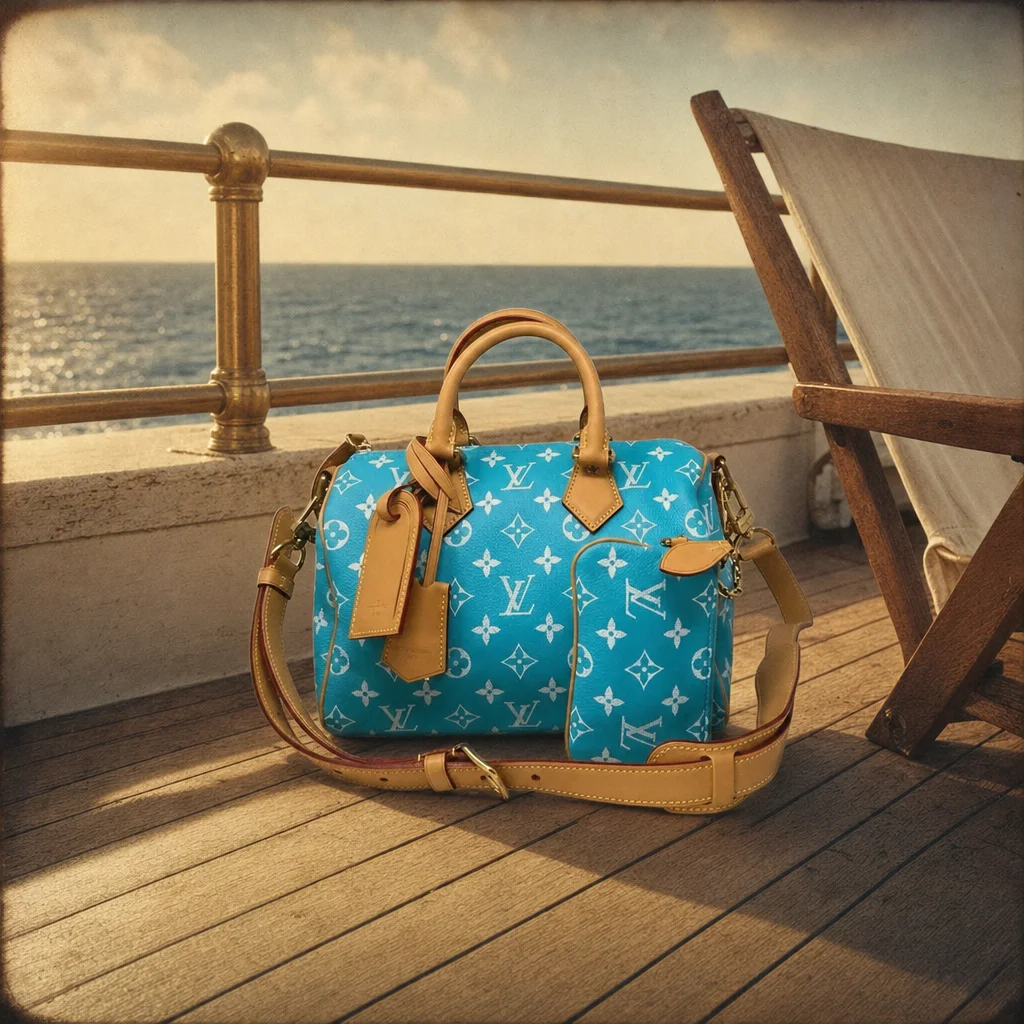
The Speedy
In 1930 Louis Vuitton launched a soft canvas bag meant for everyday use. It was called the Express, and it came after the Keepall, the house’s travel bag.
At first it came in 30 centimetres; the 35 and the 40 followed. According to Sotheby’s, the monogram canvas version came a year later.
In 1965 Audrey Hepburn asked for a smaller one, and that request became the Speedy 25.
Told differently: The sources do not fully agree: one dates the bag to 1930 and another places it soon after the Noé, of 1932. It is also unclear when or why it stopped being called the Express, or who designed it.
See the Louis Vuitton Speedy pieces →

The Noé
In 1932 a champagne producer gave Louis Vuitton a very practical commission: a bag that could carry bottles without letting them knock against each other.
Gaston-Louis Vuitton designed it tall and bucket-shaped, with four bottles standing and one upside down in the middle. A leather drawstring closes the top.
Almost a century later, the Noé is still made.
Told differently: Nobody has published the producer’s name. Sotheby’s says “Noé” nods to Noah, the first winemaker, but no document confirms it.
See the Louis Vuitton Noé pieces →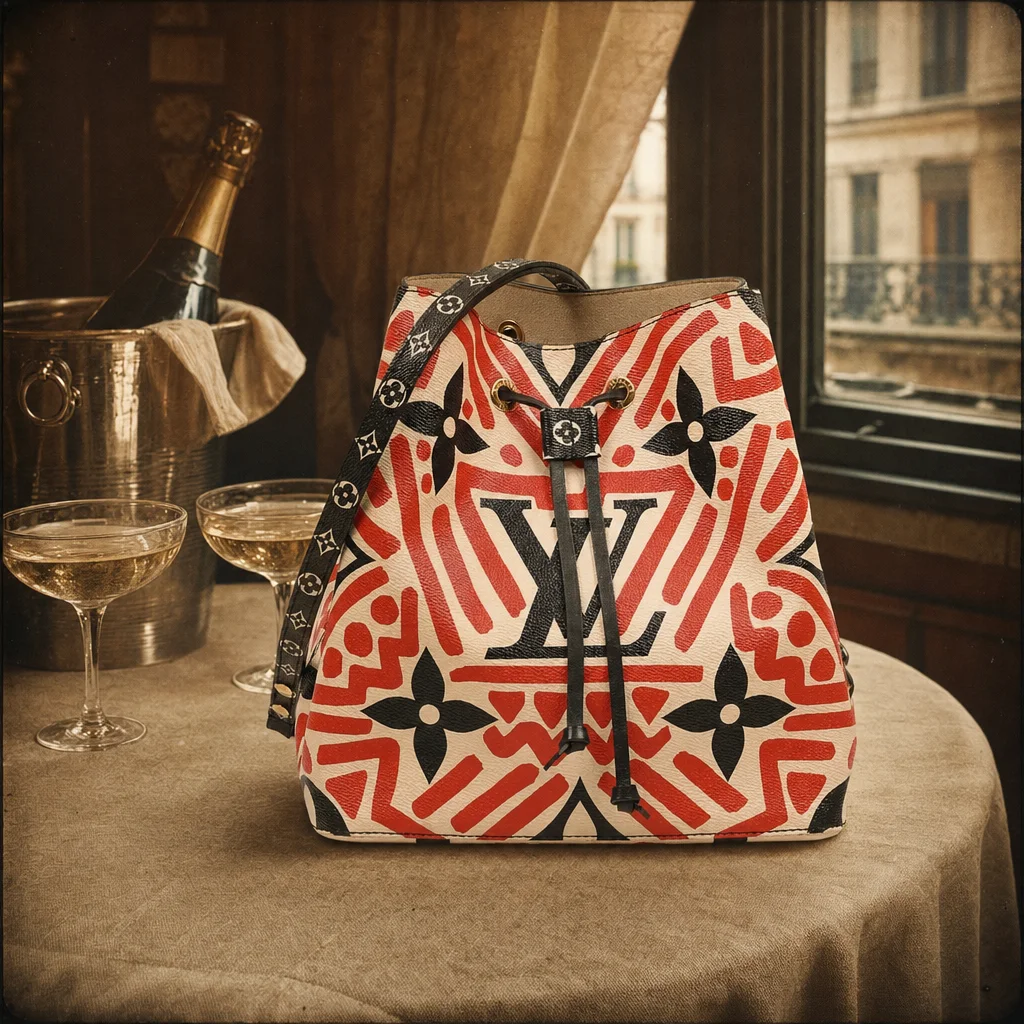
The Kelly
In 1930s Paris, Robert Dumas of the Hermès family designed a handbag that for years had catalogue names and no name of its own.
Its fame came through an actress. Grace Kelly appears with the bag in the 1954 film To Catch a Thief, and a 1956 photograph shows her holding it in front of her to hide her pregnancy.
People began to ask for “the Kelly bag”, and the house ended up adopting the name.
Told differently: The year Hermès adopted the name changes with the source: the late 1950s, or 1977. And it is not established that the photograph was a Life cover, as is sometimes claimed.
See the Hermès pieces →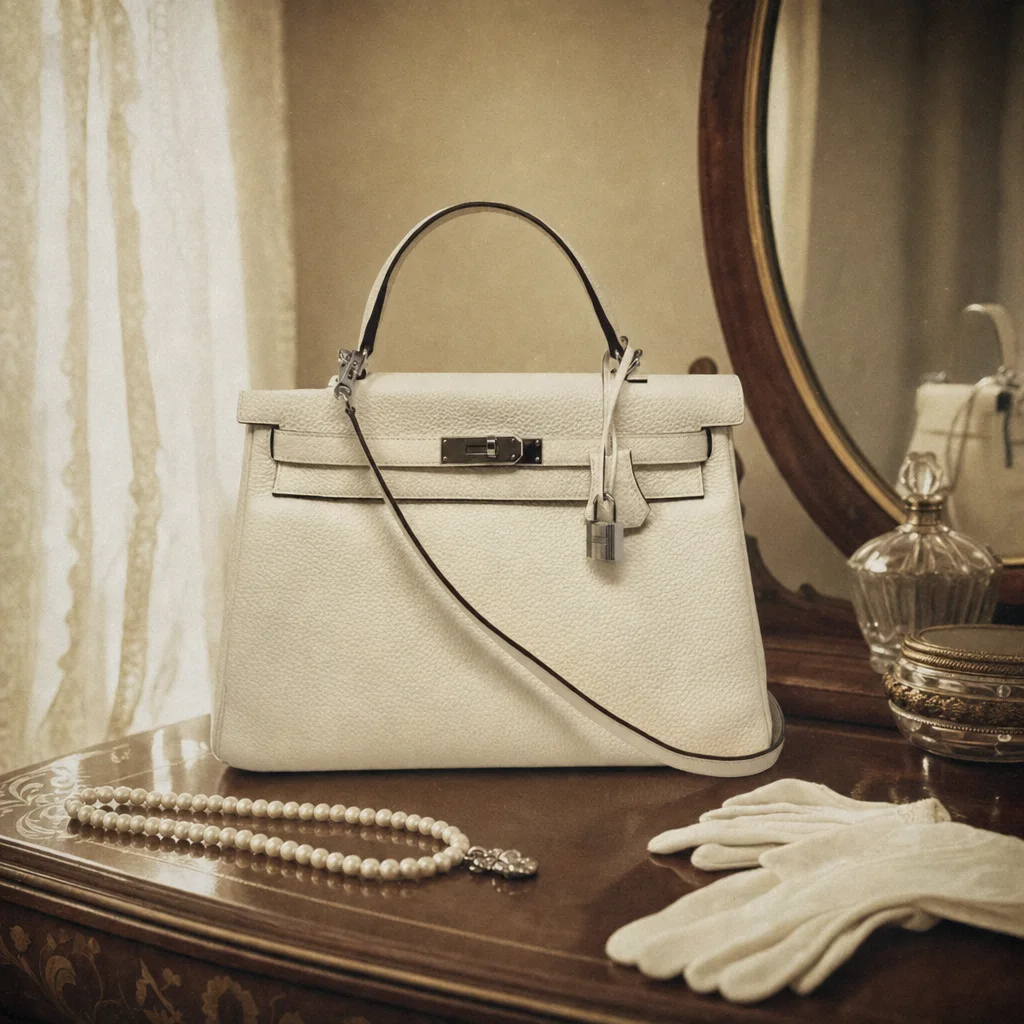
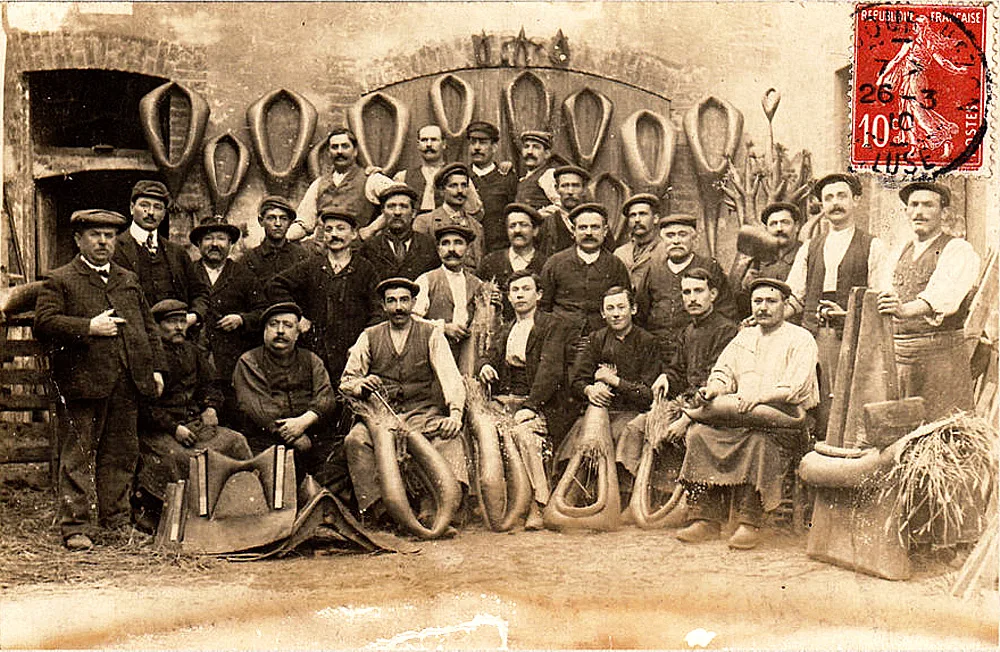
The Bamboo
Around 1947, in Florence, Gucci presented a small pigskin bag with a curved bamboo handle.
These were the post-war years, and the usual materials were short. Bamboo was the answer. Christie’s says the craftsmen heated the cane over a fire and bent it by hand.
The handle became a signature of the house. Dawn Mello brought it back in the late 1980s and 1990s, and Frida Giannini reissued it in 2010 as the “New Bamboo”.
Told differently: One source speaks of post-war scarcity and another of rationing during the war itself. And the year 1947 is an estimate by the historian Aurora Fiorentini.
See the Gucci Bamboo pieces →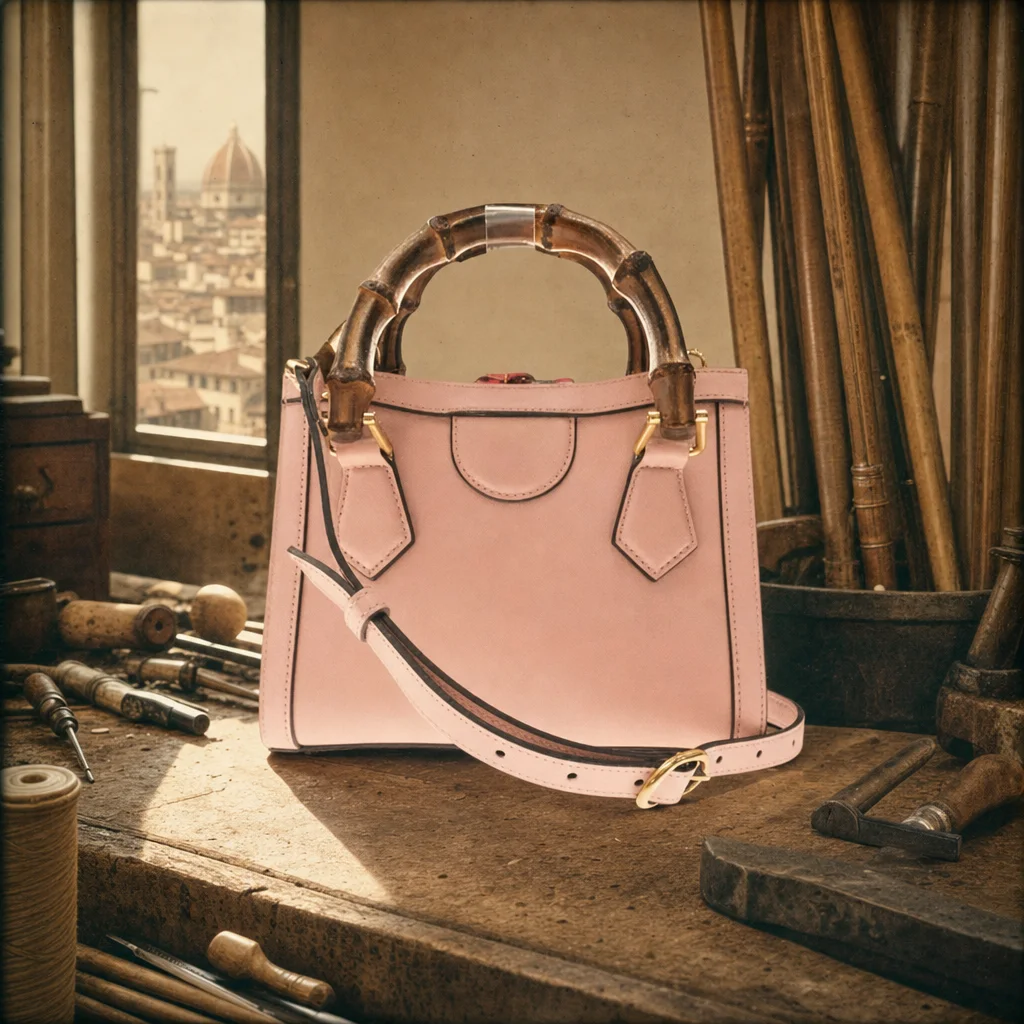
The 2.55
Coco Chanel returned to fashion in 1954 and, the following winter, reworked her handbag. She gave it a long chain so it could hang from the shoulder and leave the hands free.
The name says when it was born: the second month of 1955.
It is quilted, with a rectangular clasp on the front, a dark red lining and a zipped pocket under the flap. In the 1980s Karl Lagerfeld added the double C to the clasp, according to the V&A.
Told differently: Many legends circulate about the 2.55: that the chain comes from a convent’s keys, that the lining imitates a uniform, that it hides love letters. The sources we read present them as rumours, without proof.
See the Chanel Classic pieces →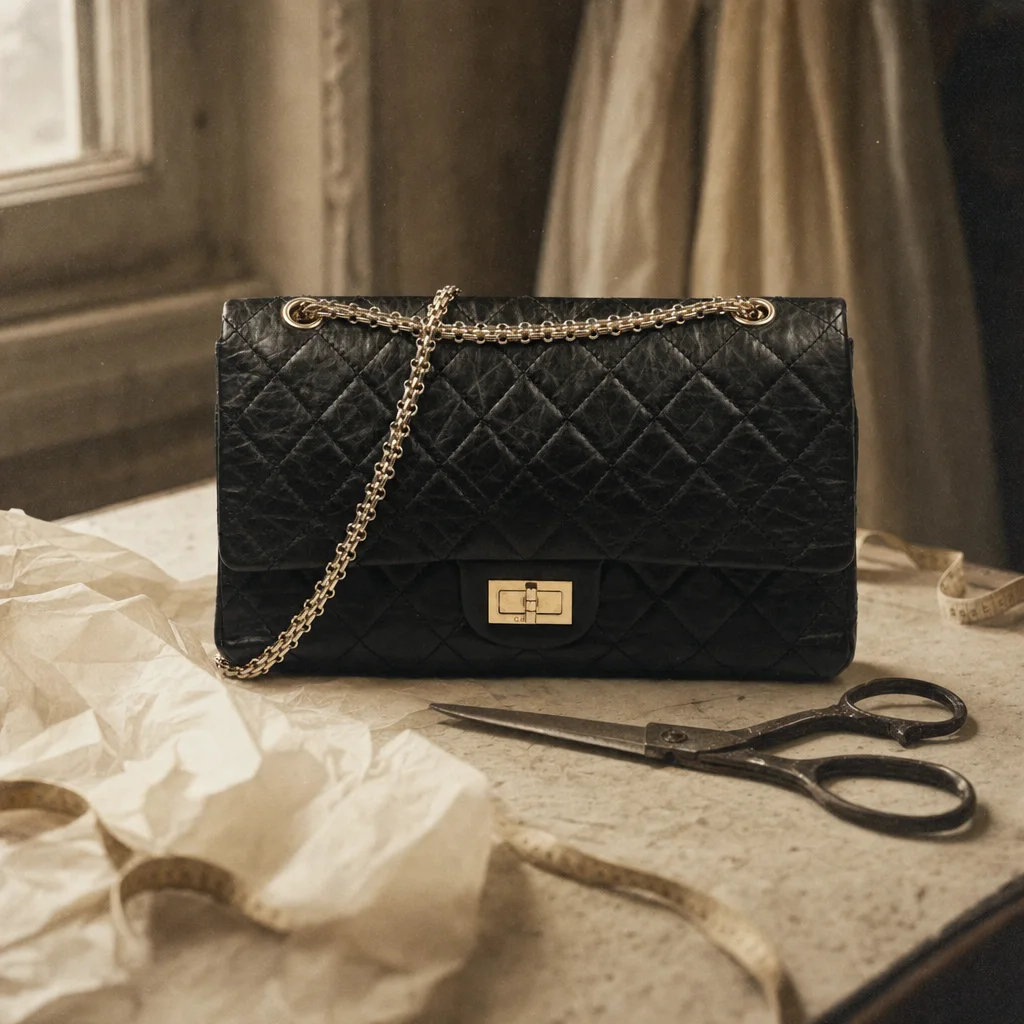
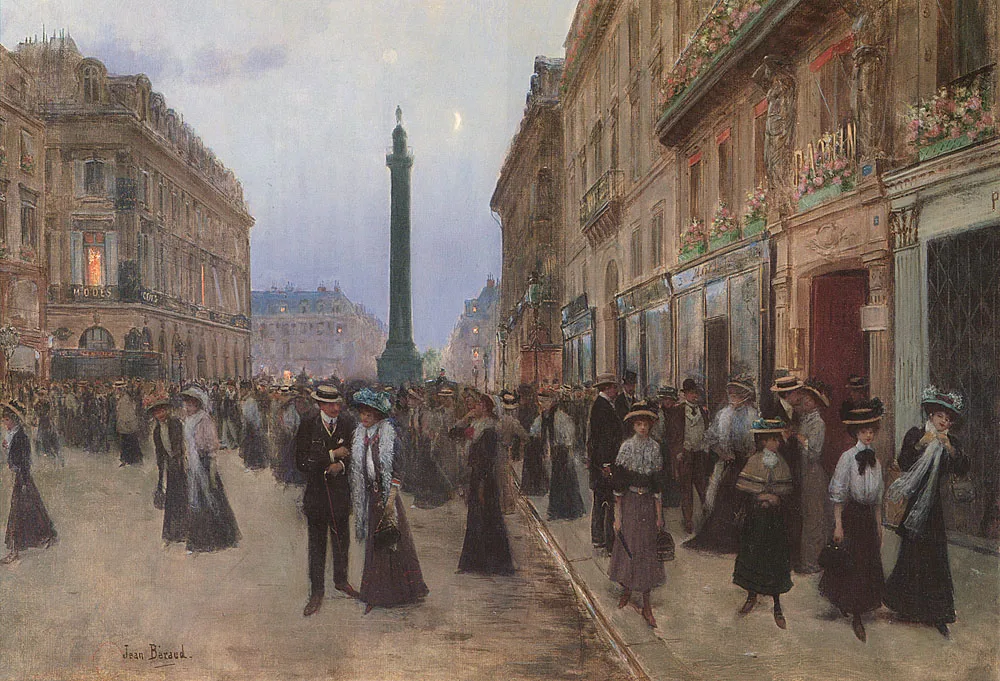
The Birkin
According to Jane Birkin’s own account, she was flying from Paris to London when her bag emptied onto the floor of the plane. Next to her sat Jean-Louis Dumas, the head of Hermès.
He remarked that she needed a bag with pockets. She asked for something bigger than the Kelly.
Hermès made a roomy, rectangular bag and launched it in 1984 under her name. Jane Birkin later said that, when full, it was heavy.
Told differently: The year of the meeting changes with the version: 1980, 1981 or 1983. So does who drew the first sketch: she said she did it on an airsickness bag; another version says Dumas drew it.
See the Hermès pieces →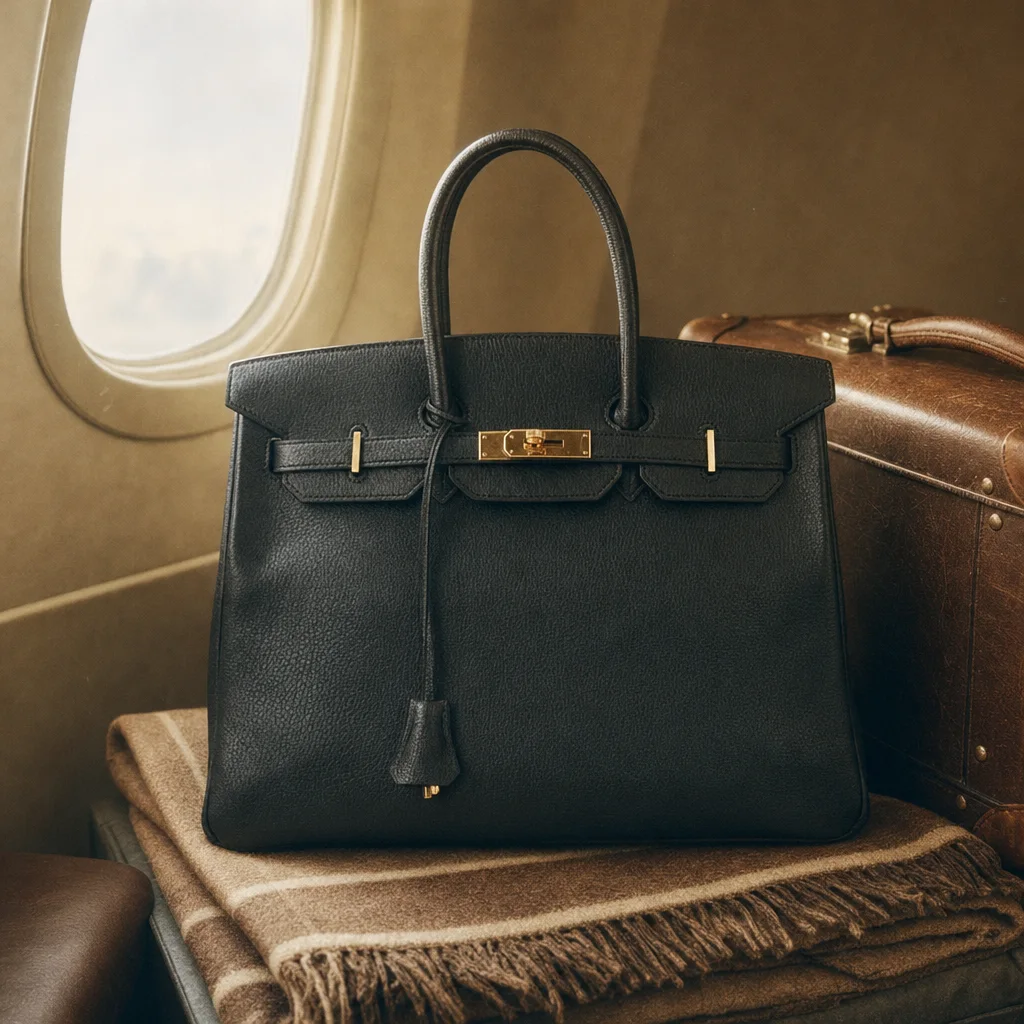
The Baguette
In 1997 Silvia Venturini Fendi designed in Rome a small bag with a single short strap, to be carried under the arm and leave the hands free.
The name has to do with bread, with carrying a baguette under the arm.
It was not an immediate success. A scene in Sex and the City, in October 2000, made it famous.
Told differently: There are three versions of the name: W Magazine’s, which speaks of French bread; the NGV museum’s, which speaks of the breadsticks Parisians carry; and Silvia Venturini Fendi’s own, who says she took it from an American journalist.
See the Fendi Baguette pieces →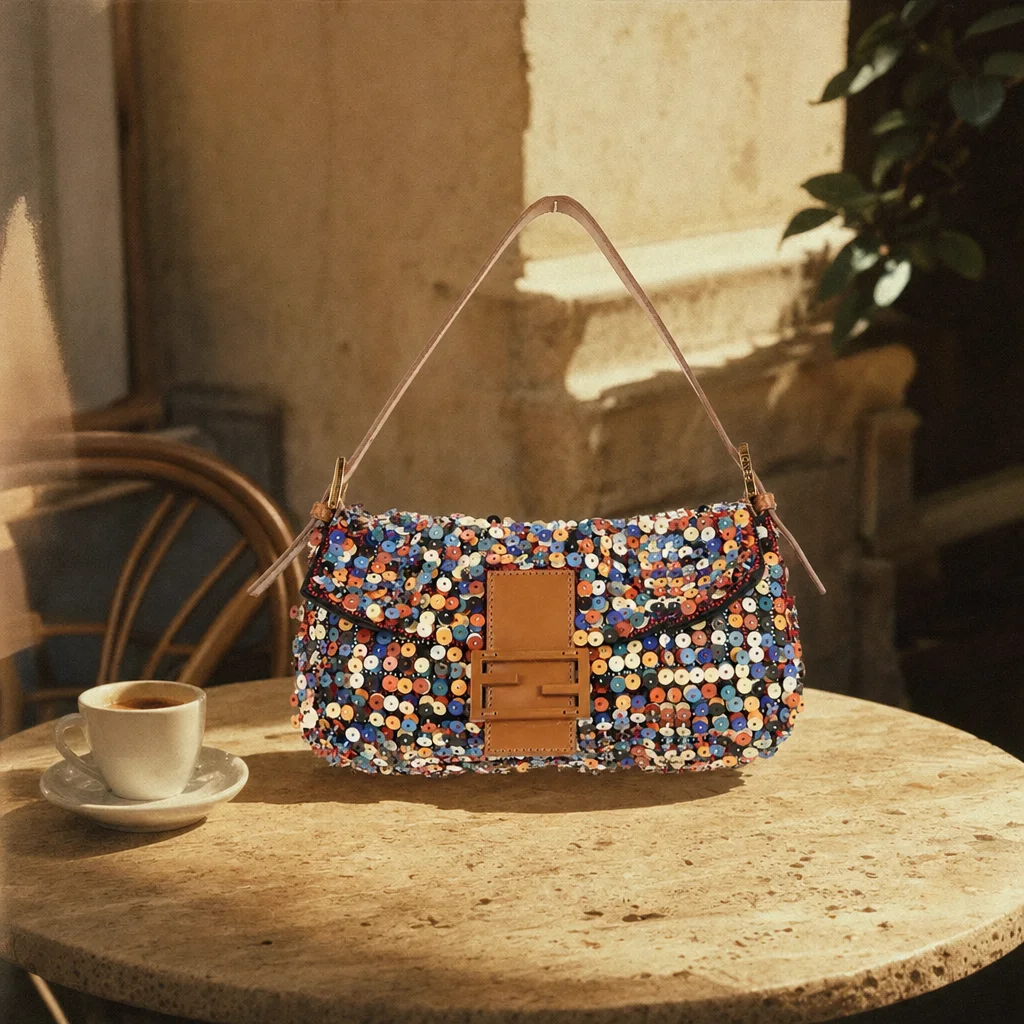
The Saddle
John Galliano, Dior’s creative director since 1996, designed the Saddle in 1999 and showed it on the spring-summer 2000 runway, in October 1999.
Its curved, asymmetrical shape recalls a horse’s saddle. A short strap and a dangling metal D complete the design.
It appeared in Sex and the City and became a much sought-after bag. In 2018 Maria Grazia Chiuri relaunched it.
Told differently: It is said that a 1976 photograph by Helmut Newton inspired it, but Dior has never confirmed it. And some museums date it to 1999 and others to 2000, the season it was shown.
See the Dior pieces →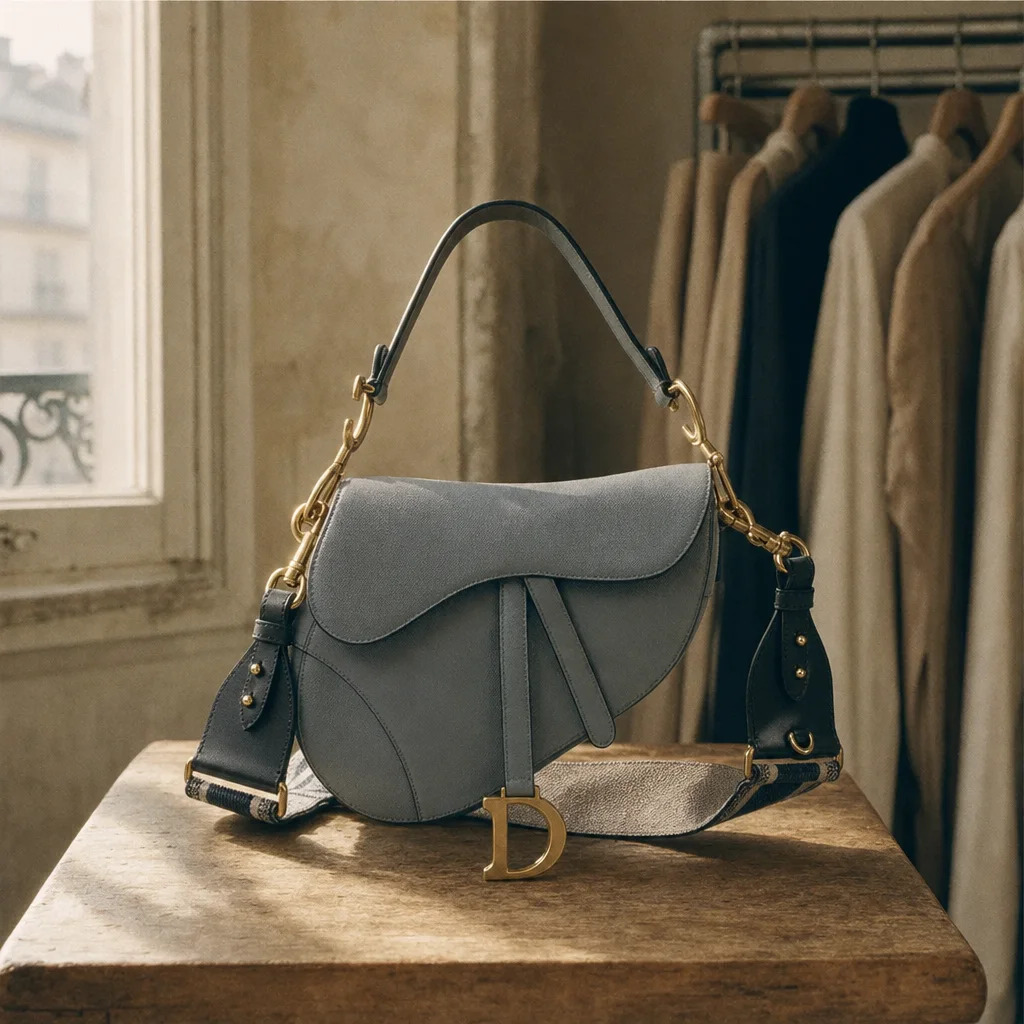
Where this comes from
Sources
- V&A, handbag by Chanel (2.55)
- FIT Museum, 2.55 bag
- Chanel 2.55, Wikipedia
- The Irish Times, the secret inside Coco Chanel’s 1955 handbag
- Birkin bag, Wikipedia
- Vogue Scandinavia, Jane Birkin on the Hermès Birkin
- Kelly bag, Wikipedia
- V&A, Kelly handbag by Hermès
- Röhsska Museum, Kelly bag
- Monaco Tribune, Hermès and Monaco’s princely family
- Sotheby’s, Louis Vuitton Speedy
- Vogue Philippines, Louis Vuitton bags
- Harper’s Bazaar India, history of the Speedy
- Sotheby’s, Louis Vuitton Noé
- The Upcoming, Louis Vuitton Noé
- Louis Vuitton, Wikipedia
- Christie’s, Gucci Bamboo, Horsebit and Jackie
- Google Arts & Culture, Gucci New Bamboo
- Gucci, Wikipedia
- NGV, the Baguette bag
- W Magazine, history of the Fendi Baguette
- Milano Finanza, Silvia Venturini Fendi
- V&A, Saddle bag by John Galliano for Dior
- NGV, Dior Saddle bag
- W Magazine, Dior Saddle bag backstory
The pictures with a gold frame are editorial images made from real pieces in our catalogue, each one labelled with its reference. The sepia photographs are historical or archive images, each with its author and licence in the caption. None of these pictures shows a Kove piece as it was in those years.
Pieces with a past
Looking for one of these?
Tell us which model and we check what is on the shelf today.
Interested? Message us on WhatsApp